Routine Changes Between Weekdays and Weekends
Published in February 2026
Introduction
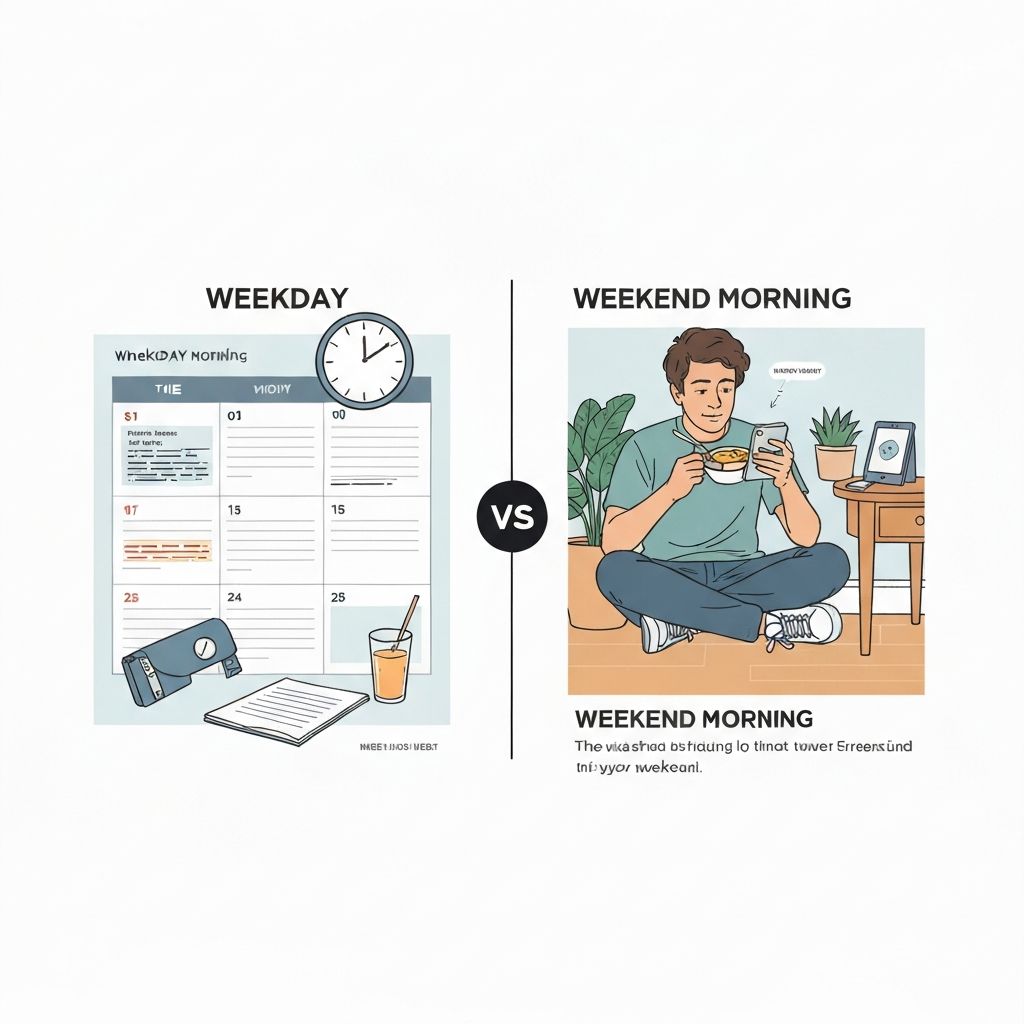
The fundamental structural change between weekday and weekend schedules represents one of the most significant factors influencing eating patterns. For individuals in employment, weekdays involve rigid time structures, travel demands, and work commitments that substantially differ from the open, unstructured time of weekends. These routine changes directly influence when, what, and how much people eat.
Weekday Work Schedule and Eating Constraints
Traditional weekday work schedules create fixed time structures for most employed individuals. Morning preparation time, commute time, work hours, and evening activities all constrain when eating can occur. Meal times are often scheduled around work demands rather than hunger or preference.
The time and location constraints of work limit food options. Work-based eating must be convenient, portable, or available near work. Packed lunches, workplace canteens, and quick meal options near employment locations define weekday food choices more than preference.
The cognitive demands of work reduce attention allocated to food choices and eating occasions. Work focus takes priority over food selection and eating pleasure, creating efficiency-based rather than pleasure-based food selection during weekdays.
Weekend Time Freedom
Weekends remove the structural time demands of work. The absence of commuting, work hours, and work commitments creates substantial blocks of unstructured time. This time freedom fundamentally changes when eating can occur and the time available for food-related activities.
Without time constraints, meal timing becomes flexible. Breakfast may occur later, meals may be extended, and eating occasions can be determined by preference rather than schedule. This flexibility changes the pattern and frequency of eating occasions throughout the day.
Sleep and Eating Schedule Disruptions
Weekend time freedom often includes changes in sleep timing. Later sleep and wake times on weekends shift the timing of eating occasions throughout the day. Extended breakfast periods, later lunch times, and flexible snacking throughout the day characterise weekend eating schedule changes.
The shift in sleep timing can extend leisure eating periods and create different eating occasion frequencies compared to structured weekday patterns.
Home-Based Weekend Activities
Weekends typically involve greater time spent in home environments. Home-based leisure activities—reading, television watching, hobbies—create different eating contexts than work-based environments. The proximity to home food storage enables spontaneous eating during leisure activities.
Home-based entertaining and family activities during weekends create social eating occasions centred in domestic spaces, differing from the eating contexts of work environments.
Spontaneous Eating and Unstructured Meals
The unstructured time of weekends permits spontaneous eating without schedule-based planning. Rather than structured breakfast, lunch, dinner pattern, weekend eating may consist of continuous or frequent eating occasions throughout the day. Snacking opportunities increase when schedule-based constraints are removed.
Unstructured eating occasions create more frequent food engagement compared to the discrete meal pattern typical of work-structured weekdays.
Food Preparation Time Availability
Weekday time constraints limit food preparation. Quick and convenient foods are necessary when time is limited. Processed foods, pre-prepared items, and fast options dominate when time for cooking is unavailable. This constraint is objective—it is not about preference but about available time.
Weekends, with their time freedom, allow for more elaborate food preparation. Cooking becomes a leisure activity rather than a rushed task. Time-intensive food preparation becomes feasible, changing the types of foods consumed.
Meal Pattern Changes
Weekday eating typically follows a standard pattern—breakfast, lunch, dinner, possibly snacks. Weekends often disrupt this pattern. Extended breakfast can delay or merge into lunch. Extended leisure time creates continuous eating rather than discrete meals. Meal pattern changes influence total eating occasions and consumption timing.
Location-Based Eating Changes
Weekdays confine most eating to home and work locations. Available food options at work determine weekday eating choices. Weekends expand available eating locations—restaurants, cafes, parks, and other leisure locations become options. The expanded location options change available food types and eating contexts.
Travel and Commute Effects
Commuting to work constrains when eating can occur and affects food choices. Travel time reduces time available for eating and meal preparation. Weekends eliminate this commute-related constraint, increasing time available for food-related activities and eating occasions.
Work Stress and Eating Automaticity
Weekday work stress creates automatic eating patterns. Habitual eating becomes routine—the same lunch, the same coffee break snack, the same dinner time. This automaticity removes deliberate choice from eating decisions. The work routine creates fixed eating patterns.
Weekend freedom allows eating decisions to be made based on preference, appetite, and interest rather than automatic routine. This shift from automatic to deliberate eating can increase engagement with food and pleasure-based eating.
Environmental and Contextual Cues
Work environments provide specific cues triggering routine eating. The break time bell, the lunch hour, colleague eating patterns—all create contextual cues for eating. Home weekend environments provide different contextual cues—leisure activities, relaxation time—that trigger different eating patterns.
The shift in environmental context between work and home creates natural shifts in eating behaviour patterns.
Social Context of Eating
Weekday work eating may be solitary or with work colleagues. Weekends shift eating toward family and chosen social groups. The social context of eating changes the number of people eating together, the types of foods selected, and the duration of eating occasions.
Cognitive Availability for Food Decisions
Work-week cognitive demands reduce mental resources available for food-related decisions. The depletion of decision-making capacity by work leads to automatic, habitual, or convenience-based food choices. Weekends, with reduced cognitive demands, permit more deliberate and engaged food-related decisions.
Conclusion
Routine changes between weekdays and weekends represent a fundamental structural shift in daily schedules that directly influences eating patterns. The removal of work time constraints, schedule demands, and associated stress; the increase in available time and location flexibility; and the shift in activity context all directly influence when, what, and how much people eat during weekends compared to weekdays.
Understanding routine changes as a primary structural factor shaping eating behaviour provides informational context about how schedule and time availability influence food consumption patterns. This information describes the objective conditions creating pattern differences without making claims about individual choice or control over these contextual factors.